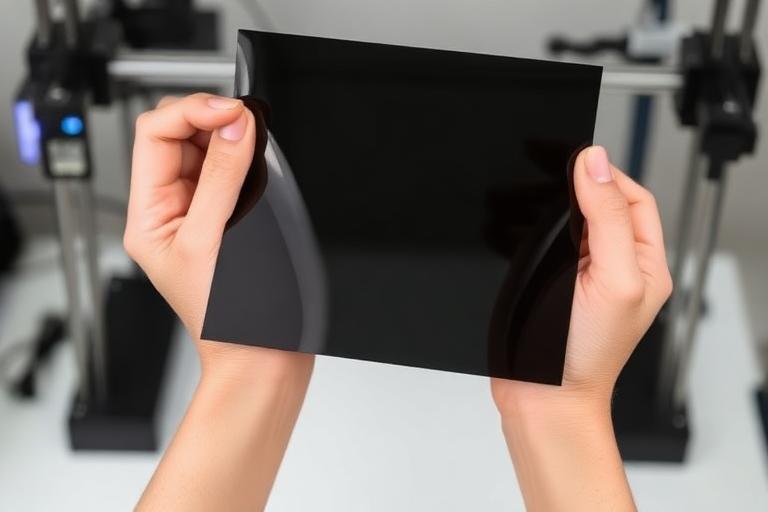
Release film is easy to underestimate. It is thin. It is transparent. It looks like a simple consumable. But in resin printing, this small film affects release force, print success, surface quality, replacement frequency and customer complaints.
Many wrong orders do not happen because the buyer chose a completely wrong material. They happen because the buyer only asked for the film name. “I need FEP film.” “I need nFEP film.” “Can you quote ACF?” Those words are not enough for sourcing.
The supplier still needs to know the printer model, vat size, film thickness, whether the buyer needs loose film or framed film, print speed, resin type and installation direction. The safer question is: which film matches this vat and this printing goal?
First, do not split PFA and nFEP too mechanically
In resin printing, PFA and nFEP are often discussed together. PFA is the material name. nFEP is often used as a product or market name for upgraded release film. For most practical buying decisions, buyers can compare three main groups: FEP, PFA / nFEP, and ACF.
FEP is the standard and cost-effective option. PFA / nFEP is often used as an upgraded release film. ACF is usually chosen for high-speed resin printers and lower peeling force. But none of these should be selected by name alone — a correct release film order starts from the vat.
The vat decides more than the film name
A film can be the right material and still be the wrong product. The customer may need FEP, but the size is wrong. The customer may need ACF, but the thickness is different. The customer may ask for loose film, but the printer uses framed film. The film may fit the frame, but the installation direction is wrong.
Before confirming an order, check:
- Printer brand and model
- Vat size and film size
- Film thickness
- Loose sheet or framed film
- Screw hole or frame structure
- Installation direction
- Resin type and print speed
- Model size and replacement frequency
- Packaging protection
When FEP is still a practical choice
FEP is the traditional release film used on many resin printers. It is widely available, familiar to users and cost-effective for standard replacement orders.
- Normal-speed resin printing
- Standard replacement film orders
- Price-sensitive customers
- Smaller model sizes with normal resin and normal lift settings
- Schools, hobby users and general repair orders
FEP should not be treated as outdated just because PFA / nFEP and ACF exist. For many normal resin printers, FEP is still practical. But for frequent printing, large models or strong suction, the lower film price may be offset by failed prints, wasted resin and support time.
When PFA / nFEP is the safer upgrade
PFA / nFEP is often chosen when buyers want better release stability than standard FEP. It is a common upgrade option for users who print more frequently, handle larger models or want a more stable replacement film.
- Frequent printing
- Larger model sizes
- Better release behavior
- Printer brand specifies PFA or nFEP
- Reduce failures from strong suction
- Upgrade without going all the way to ACF
However, upgraded material does not cancel basic checking. A PFA / nFEP film still needs the correct size, thickness, frame structure and installation method. A better material name cannot fix the wrong vat size.
When ACF makes sense, and when it creates trouble
ACF is often used on high-speed resin printers. Its main value is lower peeling force and faster release, which can support fast-printing modes and models with stronger suction.
But ACF is not a universal upgrade. Many after-sales problems start when the buyer chooses ACF because it sounds more advanced, the customer installs it like normal FEP, the smooth side and frosted side are reversed, the lift or exposure settings are not adjusted, or the thickness is different from the original film.
Before recommending ACF, confirm: whether the printer supports ACF, thickness, smooth vs frosted side direction, exposure settings, lift settings, resin type, expected surface quality, and whether the customer values speed more than fine detail.
Choosing by buyer type
- Resellers: FEP and PFA / nFEP as safer basic stock; ACF only for specific high-speed models
- Repair shops: original vat structure matters more than the material name
- Printer farms: consistency over chasing new films
- Schools and makerspaces: FEP or PFA / nFEP is easier to manage than ACF
- Service providers with large models: test PFA / nFEP or ACF as samples first
- High-speed printer users: ACF only when printer, vat and settings support it
Thickness is not a small detail
Thickness affects release behavior, durability, light transmission and printing settings. A thicker film may be stronger, but it may change release behavior or require setting adjustment. A thinner film may release differently but can be easier to damage during installation.
Before ordering, confirm thickness in mm, micron or mil. Also check film flatness, light transmission, surface condition, protective film removal, scratch-protection packaging and whether exposure or lift settings need adjustment.
The most common ordering mistakes
- Choosing only by film name
- Ignoring vat size
- Buying loose film when the customer needs framed film
- Ignoring thickness
- Treating ACF as a universal upgrade
- Installing ACF upside down
- Replacing ACF with FEP without checking settings
- Using the cheapest FEP for large or frequent printing jobs
- Changing film type across many machines without testing
Final recommendation
Use FEP for standard, cost-sensitive replacement. Use PFA / nFEP when better release stability is needed. Use ACF when the printer and settings are designed for high-speed resin printing.
Yuntrex supports FEP, PFA / nFEP and ACF release films for different resin printer vat designs, including loose sheets, size matching, thickness confirmation and protective packaging for resellers, repair shops and printer farms.