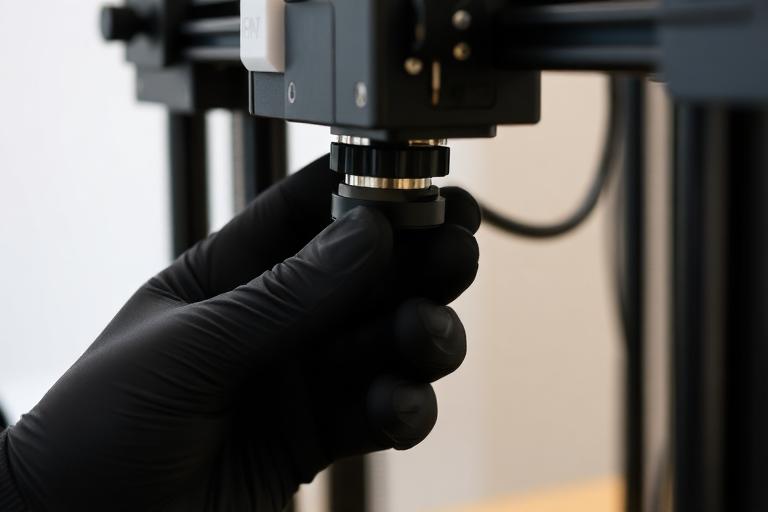
In many repair shops, the complaint sounds simple: “The PEI plate no longer sticks.” But after checking the plate, the real cause is often not a failed coating. It may be fingerprints, glue buildup, PETG residue, dust from the workshop, a first layer pressed too close, or a student using a metal scraper on a textured surface.
A PEI build plate is simple to use, but it is not impossible to damage. This guide explains how to clean PEI build plates safely and how to tell the difference between a dirty plate and a worn-out coating.
Start by checking what changed
- Did the user switch from PLA to PETG or TPU?
- Was the bed temperature changed?
- Was glue stick used and not fully removed?
- Did someone touch the surface with bare hands?
- Was a metal scraper used?
- Did the first-layer height become too close?
- Was the plate washed with hand soap, scented wipes or unknown cleaner?
If PLA suddenly stops sticking, oil or dust is often the first thing to check. If PETG sticks too strongly, the surface may be too clean, too hot or the wrong side may have been used. If parts stick well in some areas but fail in others, the plate may have uneven residue or worn coating. If the surface has peeling, bubbles, deep scratches or missing coating, cleaning will not fix it.
Keep hands off the print area
Skin oil can reduce first-layer grip, especially on PEI surfaces used for PLA and PETG. In printer farms and school labs, several people may use the same machine. Nobody notices that the center of the plate has been touched many times.
- Handle the plate by the edges
- Let the plate cool before removing prints
- Flex the spring steel sheet before using any scraper
- Use a plastic scraper only when needed
- Do not wipe the surface with a dirty cloth from the workbench
Use dish soap when the plate feels greasy
When a PEI plate has lost adhesion and IPA does not help, wash it with warm water and dish soap. This is often the best reset. Use normal dishwashing detergent, not hand soap — hand soap may contain oil, lotion or fragrance that leaves residue.
- Remove the build plate from the printer
- Wash with warm water and a small amount of dish soap
- Use a clean sponge or soft brush
- Rinse thoroughly and dry with a clean towel
- Do not touch the print area after cleaning
This is especially useful for textured PEI — oil can sit inside the texture, and a quick wipe may not remove it. Do not use boiling water, do not soak the plate for a long time, do not bend the plate while washing aggressively.
IPA is for quick maintenance, not every problem
Isopropyl alcohol is good for light fingerprints, dust and small residue on a cool plate. But if the surface is oily, IPA may only spread the oil into a thinner layer. That is why some users wipe the plate again and again and still get poor adhesion.
- Only clean the plate when it is cool
- Use a clean microfiber cloth or lint-free paper towel
- Replace the cloth if it becomes dirty
- Do not use skin alcohol pads or scented wipes
- Wash with dish soap when IPA no longer restores adhesion
Smooth PEI: be careful with PETG and TPU
Smooth PEI gives a clean bottom finish, but it can be risky with PETG and TPU. These materials may stick too strongly. If the print is pulled off by force, the PEI surface may lift, bubble or tear — especially when bed temperature is too high, first layer is pressed too close, the plate is very clean, the print is removed before cooling, or a sharp tool is forced under the part.
For customers printing PETG every day, textured PEI or satin surface is often safer than smooth PEI, depending on printer settings and user habits. Smooth PEI should not be sold as the only surface for every material.
Textured PEI: do not dig into the coating
A metal scraper may remove stuck filament quickly, but it can also scratch or lift the coating. Once the texture is damaged, first-layer adhesion may become uneven.
- Let the plate cool completely
- Flex the plate gently
- Remove the part by hand if possible
- Use a plastic scraper only when needed
- Wash the plate after heavy residue
- Do not use a knife or metal blade to dig into the surface
Acetone is not a normal cleaning method
Acetone should not be treated as a regular PEI cleaning method. Some smooth PEI sheets may allow occasional acetone use depending on the supplier or printer brand guidance, but textured PEI and coated sheets are more sensitive and acetone can damage or age the surface.
The safer rule is: do not recommend acetone unless the specific plate supplier clearly allows it for that exact surface. Dish soap for grease, IPA for light maintenance, no strong solvents unless confirmed.
Avoid cleaners that leave residue
- Avoid: hand soap with lotion, scented wipes, skin alcohol pads, kitchen cleaners with polish, strong degreasers, abrasive powders, metal brushes, unknown solvents
- Safe tools: dish soap, warm water, IPA, clean microfiber cloth, soft sponge or brush, plastic scraper
Know when the plate should be replaced
Cleaning is useful when the surface is dirty, oily or covered with light residue. Replacement is better when the coating is peeling, the surface has deep scratches, the center area is worn smooth, texture is missing in some areas, the plate is bent or no longer flat, the magnetic holding force is weak, or parts fail in the same damaged area after cleaning.
Separate three situations: a dirty plate (clean it), a wrong surface for the filament (change the surface type or use a release layer), and a damaged coating (replace the plate). This avoids unnecessary troubleshooting.
Final advice
Use dish soap and warm water when the plate is greasy. Use IPA for light cleaning on a cool plate. Avoid metal tools on textured PEI. Be careful with PETG and TPU on smooth PEI. Do not use acetone unless the exact surface allows it. Replace the plate when the coating is already damaged.
Yuntrex supplies different 3D printer build plates for resellers, repair shops, printer farms, schools and 3D printing businesses, including textured PEI, smooth PEI, satin engineering plates, cool plates, special effect plates, FR4 / G10 plates, magnetic sheets and custom-size spring steel plates. A clean PEI plate prints better. A correctly handled PEI plate lasts longer.